When a garage fire door needs replacing
A fire-rated garage door is not a permanent fixture. The springs fatigue, the slats take impact damage from vehicles, the bottom bar warps from moisture, and the fusible link corrodes. Most fire-rated garage doors need replacement after 15 to 25 years of service, depending on cycle count and environment. A door in a heated underground parking garage will last longer than one on an open loading dock exposed to road salt and freeze-thaw cycles.
The clearest signal is a failed annual drop test. NFPA 80 requires fire-rated doors to close under gravity when the release mechanism triggers. If the door binds in the guides, the barrel sticks, or the closure speed exceeds the manufacturer specification, the door has failed the test. You can repair some of these issues, but repeated failures mean the barrel assembly or curtain is worn out.
Other signs that point to replacement rather than repair: dented slats that overlap incorrectly, rust at the bottom of the guides where water collects, a motor that trips the breaker on every cycle, or a frame that has shifted enough to change the opening dimensions. If the door was installed before the current IBC edition and no longer meets the required fire rating for the occupancy type, replacement is the path to compliance.
Fire ratings for garage doors
The International Building Code sets fire resistance requirements based on what the garage connects to and the occupancy it serves:
Attached residential garages: The wall between an attached garage and the dwelling requires a fire separation. Where a door penetrates that wall, it needs a minimum 20-minute fire rating. This is the most common garage fire door rating in residential construction.
Commercial garages connected to occupied spaces: The separation depends on the occupancy classification. A garage connected to a business occupancy typically requires a 1-hour (60-minute) rated assembly. High-hazard occupancies may require 2-hour or 3-hour rated doors.
Underground parking structures: Doors separating parking from means of egress or occupied floors usually need 1.5-hour or 2-hour ratings, depending on the height of the building and the local code amendment.
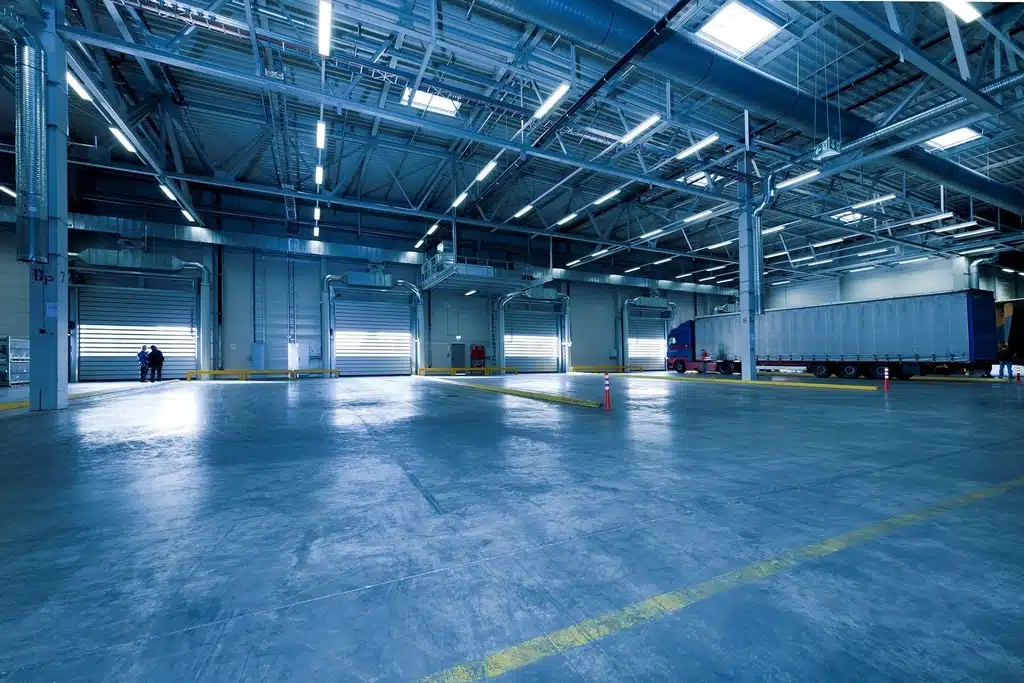
Loading docks and service areas: Fire-rated sectional or rolling doors at dock openings between a warehouse and a loading area typically carry 45-minute to 90-minute ratings.
Always confirm the required rating with the local authority having jurisdiction before specifying a replacement door. Fire code amendments vary by municipality, and the rating printed on an old door may not match current requirements.
Matching the existing opening
Replacing a fire-rated garage door means the new assembly has to fit the structural opening, not just the visible door size. Measure five dimensions before ordering:
- Finish opening width and height (masonry to masonry or steel to steel)
- Headroom above the opening (for the barrel or track on sectional doors)
- Side room on each jamb (minimum 4 inches for guides, more for motor mounts)
- Backroom depth (for the door coil or horizontal track run)
- Structural support above the header (steel beam or reinforced masonry capable of carrying the door weight and wind load)
If the old door used non-standard dimensions, you may need to modify the opening. Adding a steel sub-frame can reduce the clear opening by 2 to 3 inches on each side. That reduction matters in parking garages where vehicle clearance is tight. Document the existing clear height and width before ordering, and verify the replacement assembly will not reduce the opening below the minimum required for vehicle access.
Choosing the replacement door type
Most garage fire doors fall into two categories:
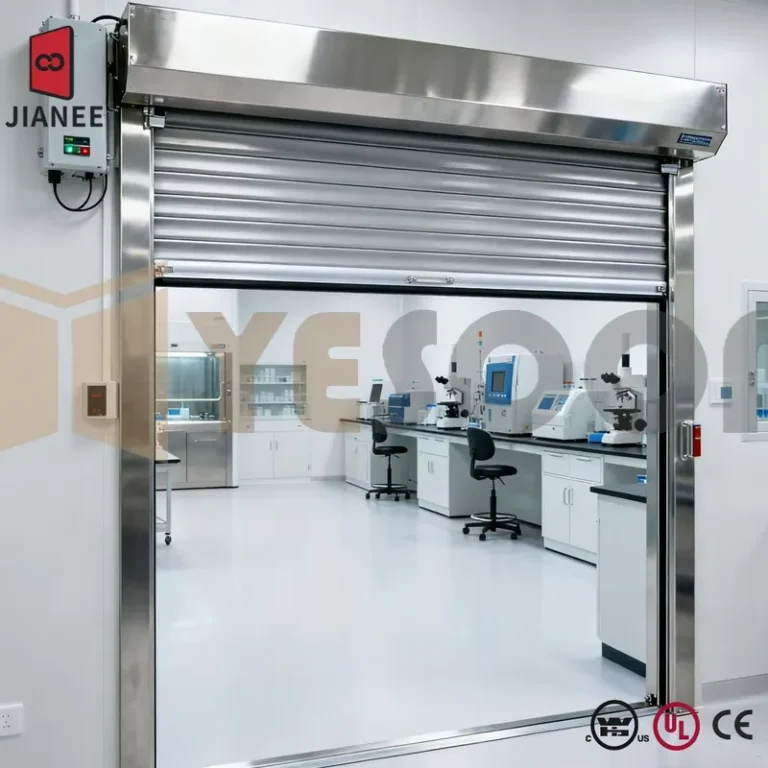
Fire-rated rolling steel doors use interlocking slats that coil around a barrel above the opening. They handle wide openings (up to 30+ feet) and high cycle counts. The barrel and counterbalance springs sit in the headroom. These doors are the default choice for commercial garages, loading docks, and industrial facilities.
Fire-rated sectional doors use hinged panels that travel on vertical tracks and then horizontal tracks at the ceiling. They are quieter and offer better insulation than rolling steel. Sectional doors are common in residential attached garages and in commercial settings where noise or thermal performance matters. Not all sectional doors carry a fire rating; verify the label and the test standard before specifying one.
For both types, the fire label is the critical compliance document. The label identifies the test standard (UL 10B, UL 10C, or equivalent), the fire rating duration, the maximum opening size for that rating, and the manufacturer. A door without a legible label will fail a fire marshal inspection even if it was originally rated.
What to specify on the replacement order
When ordering a replacement garage fire door, include:
- Opening dimensions and structural material (concrete, masonry, steel)
- Required fire rating (20-minute, 45-minute, 60-minute, 90-minute, 180-minute)
- Test standard (UL 10B for neutral pressure, UL 10C for positive pressure, or both)
- Cycle frequency (manual or motor-operated, cycles per day)
- Motor and control requirements (3-phase, 1-phase, fire alarm integration)
- Fusible link or electromechanical release (or both)
- Wind load rating if the opening is exposed to exterior conditions
- Finish (galvanized steel, powder coat color, stainless steel for corrosive environments)
- Vision panels if required (fire-rated glass with wire mesh or ceramic)
The supplier needs this information to manufacture the door with the correct fire label. Missing one of these can delay the order or result in a door that does not meet code.
Installation and acceptance testing
A fire-rated garage door must be installed by a qualified contractor. After installation, NFPA 80 requires an acceptance test that includes a full drop test from the closed position. The door must close completely under gravity, without power, at a controlled speed. The contractor documents the test results, the fusible link location, the clearance dimensions, and the fire label serial number.
Keep the acceptance test documentation with the building fire safety records. Fire marshals and insurance auditors will ask for it during inspections. Without the documentation, the door is considered non-compliant even if it functions correctly.
Related guides
Rolling Fire Door Replacement: Matching the Existing Opening
Steel vs Wood Fire Doors: Which Is Right for Your Building
UL Rated Fire Doors: What the Rating Actually Covers
How to Choose Fire Rated Doors for Hotels, Apartments, and Commercial Buildings