Door suppliers use certification terms heavily, but buyers often confuse them. Understanding what each certificate actually proves helps you avoid mislabeled products and customs delays.
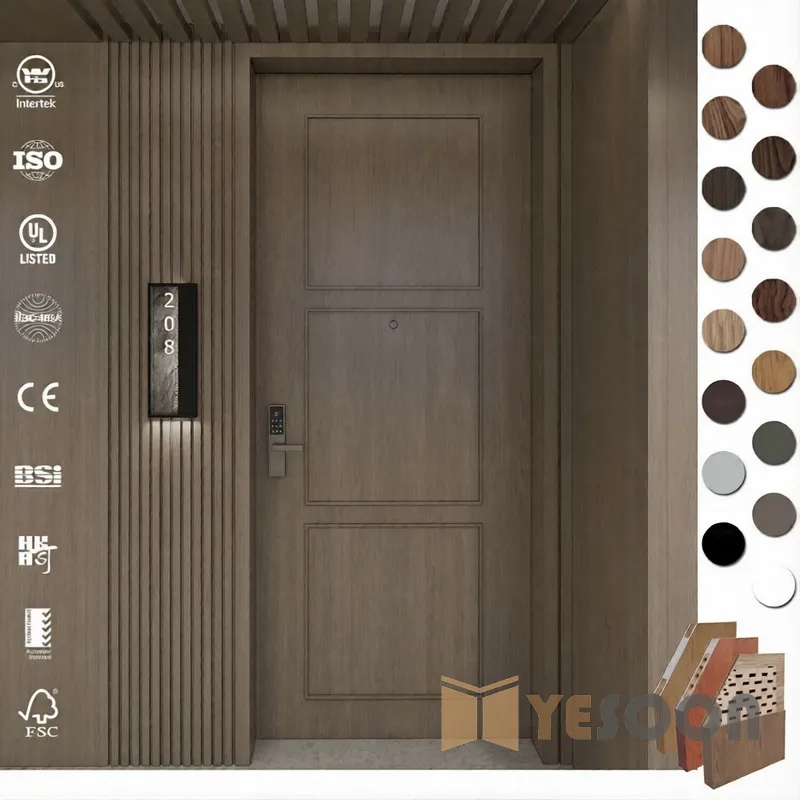
What each certification means
Quick reference table
| Mark | What it proves | Main market |
|---|---|---|
| UL | Product meets tested safety and fire standards | North America |
| CE | Product conforms to applicable EU legislation | Europe |
| ISO 9001 | Factory has a certified quality management system | Global |
| SGS audit | Independent verification of factory and goods | Global trade |
How to verify a certificate
- Ask for the certificate number and issuing body
- Check the product model and rating match the certificate
- Confirm the certificate is valid and not expired
- Request the test report for fire-rated products
- For large orders, use third-party inspection before shipment
FAQ
Does ISO 9001 mean the door is fire rated?
No. ISO 9001 certifies the factory quality management process, not the product performance. Fire ratings must come from a product test standard such as UL or the applicable local standard.
Can one door have both UL and CE certification?
Yes, many manufacturers test the same product family for multiple markets, but the configurations and documentation may differ. Confirm both marks are listed for the exact model and opening size.
Why do buyers request SGS inspection?
SGS inspection independently verifies quantity, quality, packaging, and loading, which reduces risk for importers who cannot visit the factory in person.
Yesoon Door supplies ISO, CE, and SGS audited factory direct products. Request certification documents with your quote at our contact page.
For project pricing and export documents, see our fire rated roller door page and our Africa project export page.
Related Products
Browse our certifications, fire doors and windows and more factory direct door and window solutions.
Request a quote
Tell us the opening size, project location, quantity and any required certification. We will confirm the specification, lead time, export documents and factory price.