What a fire rated rapid roll door actually is
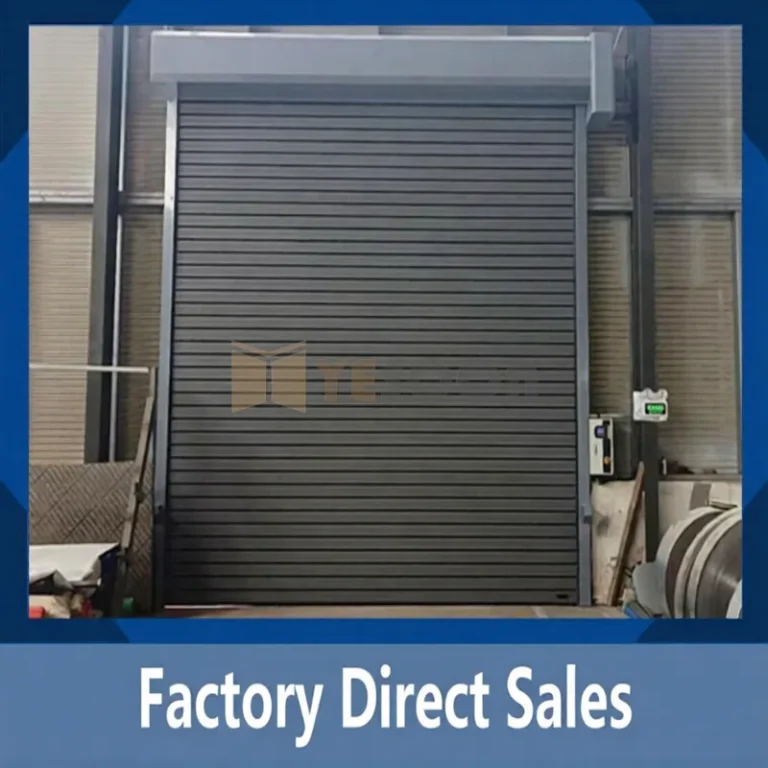
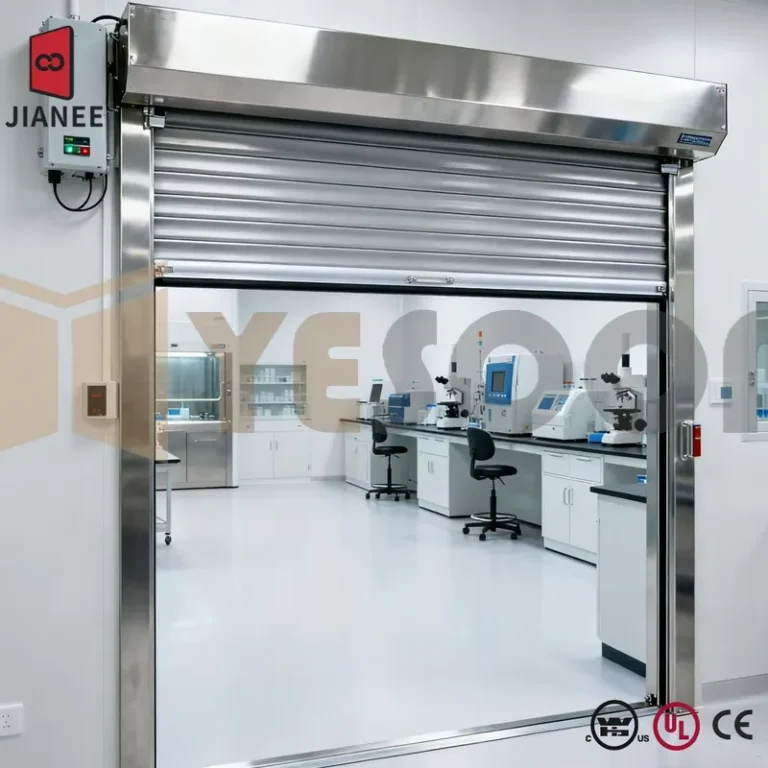
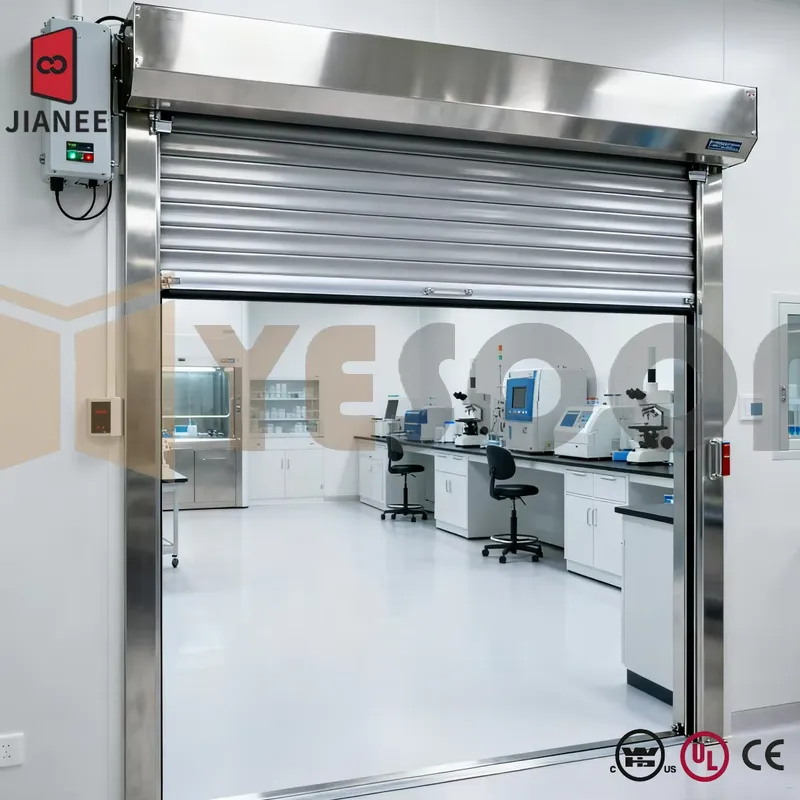
A fire rated rapid roll door combines a fast-opening curtain with a tested fire resistance rating. The door opens at the speed of a high-speed industrial door, usually 0.5 to 1.5 meters per second, and closes in a fire either by gravity release or through the fire alarm system. The rating is what separates it from a standard rapid door: the complete assembly, curtain, guides, release mechanism, and operator, must hold back fire for the tested period, typically 1 to 3 hours.
These doors appear in warehouses, cold stores, pharmaceutical plants, and logistics hubs where a fire-rated opening also needs high cycle rates. A conventional fire shutter is slow and heavy. A rapid fire door is a different product family, built to move fast during normal operation and still act as a rated barrier when the alarm triggers.
Where a rapid fire door earns its cost
Any opening that separates fire zones and handles frequent traffic is a candidate. Think of a conveyor line passing through a rated wall, a forklift route between a warehouse and a processing area, or a doorway in a cold store that opens dozens of times per hour. A standard fire shutter would slow the operation or stay open for long stretches. A rapid fire door closes the opening quickly after each pass, which cuts energy loss and keeps the fire barrier closed most of the time.
The premium over a standard shutter only makes sense at high cycle counts. If the opening is used a few times a day, a conventional fire-rated rolling door is cheaper and adequate. The fast version pays off when the door cycles dozens of times per hour, because the time the opening stays open is the main operating cost.
Ratings and test standards
Fire resistance is measured the same way for rapid doors as for conventional fire shutters. In North American projects, the common standards are UL 10B for neutral-pressure tests and UL 10C for positive-pressure tests, with ratings of 1, 1.5, 2, or 3 hours. NFPA 80 sets the installation, labeling, and annual drop-test requirements for fire doors and shutters, including rolling fire doors used in rated walls.
In the UK and markets that follow British standards, fire shutters are tested to BS 476-22 or BS EN 1634-1, with ratings such as FD60, FD120, and FD240. The number is the minimum integrity period in minutes. A rapid fire door built for the European market carries a different certificate than one built for the US market, so the destination country decides which standard the supplier must document.
Ask for the test report that names the exact curtain, guides, operator, and release arrangement. A certificate for a conventional fire shutter does not automatically cover a rapid version with a different motor and control system.
Steel vs fire-rated fabric curtain
The curtain is where rapid fire doors split into two main designs:
Steel slat curtains are heavier and slower to open, usually at the lower end of the 0.5 to 1.5 m/s range. They are the safer choice for wide openings and high-hazard occupancies, and they hold 2- to 3-hour ratings across larger sizes. Steel also survives forklift impacts better than fabric.
Fire-rated fabric curtains are lighter, open faster, and cost less per square meter. The fabric is coated with an intumescent or heat-resistant layer and is tested as part of the rated assembly. Fire-rated fabric shutters commonly carry 1- to 3-hour ratings within tested size limits, but the certified width range is usually narrower than steel. A fabric door that exceeds its tested size loses the rating.
Both types need deep guides, a reinforced bottom bar, and an operator sized for the curtain weight. The certificate defines the maximum opening size, not the manufacturer’s brochure.
How the door closes in a fire
The closing sequence matters more than the opening speed. A fire rated rapid door closes by one of two mechanisms:
Gravity drop uses a fusible link or an electromechanical release. The link melts at a set temperature, or the fire alarm panel energizes the release, and the curtain falls under its own weight. NFPA 80 requires fire shutters with fusible links to be drop-tested annually. The door must close fully and latch without power.
Motorized closing drives the curtain down on a signal from the fire alarm or a smoke detector. Motorized closure is used where a free-falling curtain could injure someone, but it needs battery backup and a control panel that works during a power failure.
Specify which release the project requires before ordering. Some doors ship with both a fusible link and an alarm interface, so the local authority can choose the trigger. The annual drop test still applies regardless of the release type.
When a fast door is not a fire door
A high-speed PVC or fabric door without a fire certificate is an industrial door, not a fire shutter. Placing it in a rated wall violates the fire separation even if it looks similar to a rated rapid door. The same applies to a high-speed insulated shutter used in a fire wall: speed does not create a rating.
If the opening needs both high cycle rates and a real fire barrier, use a certified rapid fire door, or combine a fast non-rated door with a separate fire shutter behind it. The second option is common where the fire shutter would slow normal traffic too much.
What to specify before ordering
- Clear opening width, height, headroom, and side room
- Required fire rating and the standard for the destination country
- Curtain type: steel or fire-rated fabric
- Opening speed and cycles per hour
- Release method: fusible link, electromechanical, motorized, or both
- Fire alarm interface voltage and signal type
- Wind load for exterior openings
- Temperature difference for insulated or cold-store versions
- Power supply, motor voltage, and phase
Send these details with the project location. The supplier can then confirm the tested assembly, the certificate that matches the opening size, and the export documents for your destination port.
Related guides
Fire Shutter Code Requirements: NFPA 80 and IBC
Rolling Steel Fire Doors: When You Need a Rated Rolling Shutter
Fire Rated Rolling Shutter Doors: What to Specify Before You Order