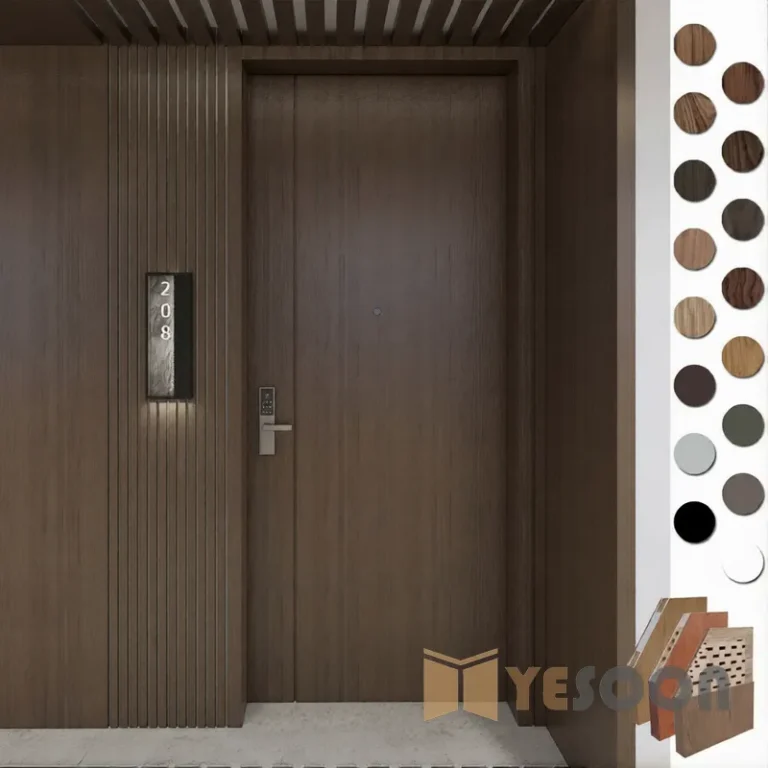
Hotels, offices, recording studios, and conference rooms need doors that control sound without looking industrial. A “soundproof” door is only as good as its seals and installation. This guide explains how acoustic doors are rated and how to specify them correctly.
How sound rating works
Typical performance levels
| Rating | Typical application | What you hear |
|---|---|---|
| STC 30-35 | Standard interior doors | Normal speech is audible |
| STC 40-45 | Hotel rooms, offices | Loud speech is reduced |
| STC 48-52 | Conference rooms, studios | Speech is faint or inaudible |
| STC 55+ | Recording studios, critical spaces | Very high sound isolation |
Acoustic door specification checklist
- Define the target STC or Rw rating for the opening
- Confirm the wall rating around the door; the door cannot outperform the wall system
- Use acoustic seals, drop seals, and automatic bottom seals
- Check the frame gap and installation tolerance
- Request the laboratory test report for the complete assembly
FAQ
Will a heavier door automatically be more soundproof?
Not always. Mass helps, but gaps and poor seals leak sound even through a heavy door. The frame, seals, threshold, and installation are equally important.
Can acoustic doors be fire rated too?
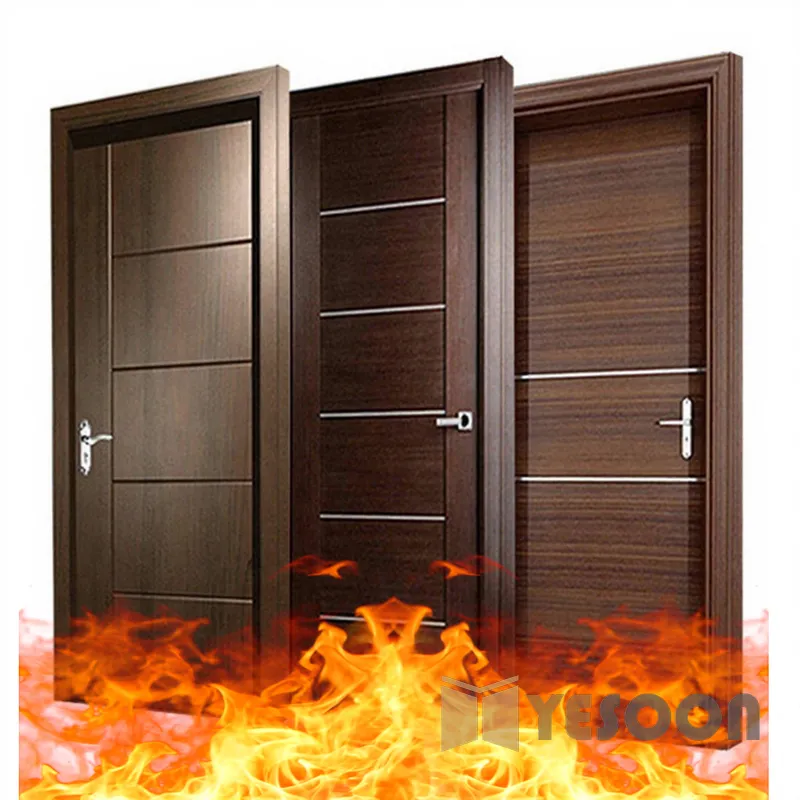
Yes. Some acoustic doors also carry fire ratings, but the acoustic seals and fire seals must be compatible with the certified assembly.
What is the difference between STC and Rw?
They use similar concepts but different measurement and calculation methods. For international projects, confirm which standard the local acoustic consultant expects.
Tell Yesoon Door your required acoustic rating and fire rating, and we will match the correct door, frame, and seals. Start with a quote request at our contact page.
Related Products
Browse wpc composite doors, pvc doors and more factory direct door and window solutions.
Request a quote
Tell us the opening size, project location, quantity and any required certification. We will confirm the specification, lead time, export documents and factory price.